Guides
Part of How to write and verify a quiz question with one defensible answer
Difficulty in a guess the celebrity picture quiz comes from a few levers
A guess the celebrity picture quiz runs on recognition rather than recall, with a few levers that set difficulty and clear rules about where images come from.
A picture round is the only part of a quiz where the answer is sitting in plain sight and people still cannot produce it. That gap is the whole appeal, and it is also the thing that makes picture rounds harder to build well than they look.
What to take away
- A picture round tests naming, not seeing. Almost everyone recognizes the face. The scoring happens at the moment they try to attach a name to it.
- Difficulty in a picture round comes from what you take away: the crop, the era, the context, the color. Choose one lever and be consistent.
- Where the image came from is a real problem with a real answer. Sort it before you print anything.
Recognition is not recall
Human beings are startlingly good at face perception. We hold thousands of faces and pick one out of a crowd in a fraction of a second. What we are bad at is the last step, the retrieval of the name, which runs on a different and much weaker path.
Recognition vs recall
Recognition
- What it does
- picks face from crowd
- Speed
- fraction of a second
- Strength
- startlingly good
- Quiz effect
- pleasant, nobody lost
Recall
- What it does
- retrieves the name
- Speed
- slow, often fails
- Strength
- much weaker path
- Quiz effect
- groan, stuck one step short
That mismatch is why picture rounds produce their particular groan, and players are not failing to identify anyone. They are stuck one step short.
They can name the person's other work, their voice, roughly when they were famous, everything except the two words you asked for. A quiz built on recognition memory is pleasant in a way a written round is not, because nobody is ever fully lost.
Two practical consequences follow. First, a picture round marks generously by nature, so decide in advance whether a surname alone scores. Second, a picture round is the wrong place to hide a genuinely obscure person, because failure there is flat rather than frustrating, and frustration is the fun part.
The levers that set difficulty
You make a picture question harder by removing information, and the lever you pick changes what is being tested.
| Lever | What you remove | What it now tests |
|---|---|---|
| Crop | Everything but the eyes, or the jaw, or one feature | Fine-grained face memory |
| Era | The familiar period, leaving an early or late image | Whether the player knows a career, not a face |
| Context | Costume, set, stage, anything that identifies the work | Face memory without the surrounding cue |
| Treatment | Color, focus, resolution, or the image reduced to a silhouette | Shape memory and confident guessing |
| Angle | The front view, leaving a profile or a rear three-quarter | Almost nothing useful, in most cases |
Mixing levers inside one round is the usual mistake. Six tight crops and then one silhouette does not read as variety to a player. It reads as the quiz changing its own rules partway through. Pick a lever, run the round on it, and switch levers between rounds instead.
The era lever deserves care, and the early-career image is an age question. It is fair for a room that grew up with that career, but impossible for one that did not.
That is fine if you meant it; check room composition first. If it skews young, use an easy guess the celebrity set before pulling any era lever.
Where the pictures come from
This is the part most quiz sets skip, and it is the part that can actually cause you trouble. A picture pulled from a search results page has no known owner, no known date, and no known permission attached to it.
Image rights check
- Establish what the image actually shows
- Establish who made it
- Establish what you may do with it
- Private game, public event, or charged?
- If any answer is missing, replace the image
Work through it in this order. Establish what the image actually shows before you use it, because a mislabeled photo produces a question with a wrong answer you had no way of spotting. Establish who made it.
Then establish what you may do with it. That depends on whether you run a private game among friends, a public event, or something you charge for. A quiz for eight people in a living room differs from one on a screen in a bar.
The second one deserves a real answer rather than a shrug. Rights and reproduction are also the first thing a career quizzes picture round has to settle.
If you cannot answer those three questions for an image, replace the image. There is no version of a picture round that is worth an argument about rights, and the replacement usually takes less time than the argument would.
Fitting it into the quiz
A picture round is a change of pace, which is most of its value. It gives people something to point at and talk over. It lets quiet people in a written round contribute.
Where to place the picture round
Is it the first round?
sets false expectation of ease
good third round, change of pace
That makes it a good third round and a poor first. It sets an expectation of ease the rest of the quiz will not meet.
Hand out the sheet and let it sit through another round if you can, because people solve picture questions in the background.
A round they can chip away at while the quiz continues gives more pleasant near-miss feeling than one rushed in four minutes.
Keep picture material separate from your written photo quizzes bank. The two are paced differently and should be built differently.
Common questions
How many images belong in one round?
Ten to twelve if it runs alongside another round, six to eight if the room has to stop and do it. Beyond that people stop looking carefully and start filling in the blanks with whoever they already wrote down.
Should I number the images or leave them loose?
Number them, and put the number where a folded sheet cannot hide it. Most marking disputes in picture rounds are not about the answer at all. They are about which picture an answer was meant for.
Do partial names count?
Decide before the round and say it out loud. A surname is usually enough, since the name is the whole difficulty. If you want full names, the round has to be easier to compensate, or you are simply scoring the same recognition twice.
Can I mix in things that are not faces?
Yes, and it works well. Objects, places, and handwriting all trigger the same recognize-then-stall feeling. A short set of celebrity signatures or a few frames from a title sequence give you the same effect with a different flavor, and they keep a picture-heavy quiz from feeling repetitive.
Is an old photo of someone as a child fair?
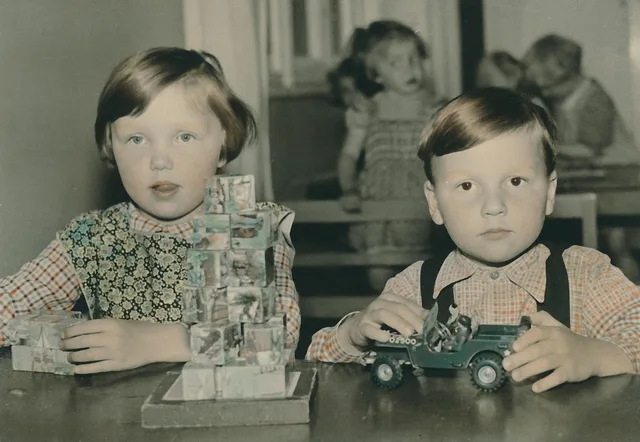
It is a distinct format, not a harder version of this one, and it usually needs its own rules about sourcing and consent. Treat it as a childhood photo games round with its own standards, not one image dropped into an ordinary set.
Grouping images by job works the same way, changing what the round measures. Plan it as a guess the celebrity by profession round instead.