Reviews
Part of Collecting photos for childhood photo games without a consent mistake
Childhood photo games: how a round runs, what family photos can prove, and the consent rules
Childhood photo games explained for quiz hosts: the two round formats, how to run and score one, what a family album can and cannot prove, the copyright and consent rules, and how celebrity rounds differ.
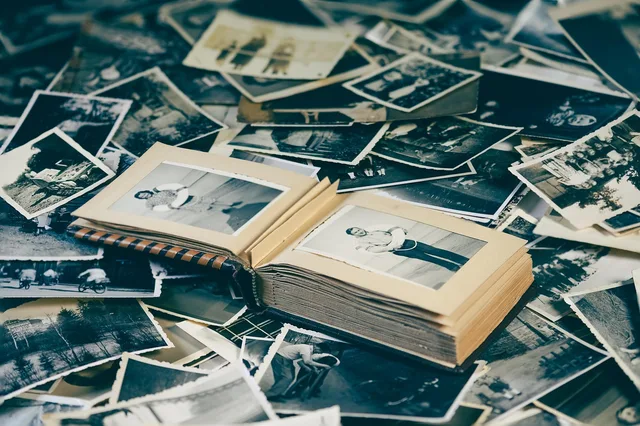
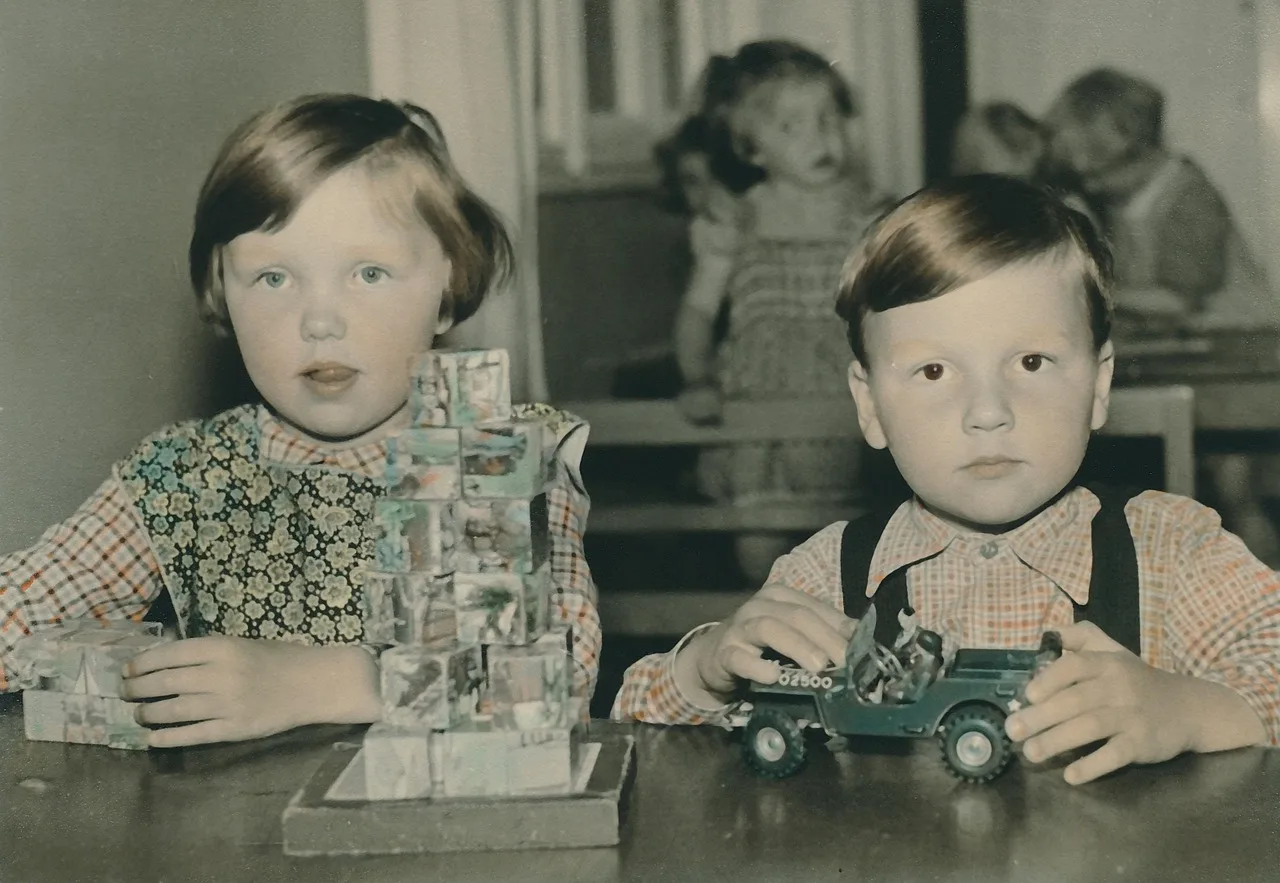
A family photograph is a record made by an amateur, for a private audience, about an occasion somebody thought worth recording. That is a very particular kind of document, and it is unlike almost every other image a quiz round uses.
What follows are the childhood photo games facts worth knowing: how these pictures came to exist and what survived. They explain why a childhood photo round behaves strangely, and they are the reason a picture that looks like plain evidence is nothing of the sort.
What a childhood photo round is
A childhood photo round comes in two shapes. In the first — the baby photo game that showers, family parties and office quizzes call "guess the baby" — every player hands in one childhood picture and the room matches pictures to names. In the second, the pictures are already public: the celebrity recognition quiz built on published childhood photographs of famous people. Both formats stand or fall on the same thing, and it is not the picture: it is whether the person in the frame handed it over. The setup differs in one way that matters. In the first format the host collects the pictures from the people in them and controls the set; in the second the host works from copies anyone can find, which is where the consent question gets harder.
How a round runs and is scored
Both formats can run the same way. These are common house rules, not an official standard, so adjust them to the room.
- Collectfor a family round, ask each player a week ahead for one childhood picture, with the name of the person in it. For a celebrity round, the host picks the pictures.
- Number each picture and keep a key sheet. Never write a name on the front.
- Show each picture for a fixed time, such as 20 seconds, and have players write one name per number.
- Score one point per correct name. In the family format, nobody scores on their own picture.
- Break ties with a bonus picture, not by arguing about resemblance.
- Reveal the key at the end, then delete the set.
What to take away
- A family album is a selection made twiceonce by whoever pressed the shutter, and again by whoever kept the results.
- What is missing from an album is not evidence that it did not happen. It is evidence about who was holding the camera.
- The picture is the property of a household, and the people in it did not all agree to be there.
About who made them
- Amateur photographs were mostly taken by one or two people in a household, which is why those people are the ones who barely appear.
- Film cost money per frame, so pictures were rationed. A moment worth a frame was a decision, and the decision was somebody's.
- Occasions dominate. Ordinary days are almost absent from older albums, and the resulting record makes childhoods look like a sequence of events.
- Children were photographed far more in the first years than afterward, in most households, which skews any set drawn from albums toward the very young.
- The photographer's habits are all over the collectiona favored angle, a favored spot in the house, a tendency to line people up. Those habits identify the album more reliably than anything in the frame.
About what survived
How a photo gets filtered
- Frame taken
- Discarded at collection
- Prints given away
- Handled prints wear out
- What reaches you
- Albums are edited. Blurred, unflattering and awkward frames were discarded at the point of collection, so what remains is already a curated set.
- Prints were given away, kept in more than one household, and separated from their negatives. Two branches of a family often hold different subsets of the same shoot.
- Damage is not random. The pictures handled most are the ones most worn, so the best-loved images are the ones in the worst condition.
- What reaches you is therefore filtered several times over, which is survivorship bias in a very literal form: you are looking at what lasted, not at what was taken.
- Digital collections invert the problem. Nothing is discarded, so the selection happens at the moment of sharing rather than at the moment of keeping.
About what a picture can and cannot show
Posed versus candid frames
Posed
- What it records
- An intention
- Who arranged it
- The photographer
- What it tells you
- A plan
Candid
- What it records
- An accident
- Who arranged it
- Nobody
- What it tells you
- A moment
- A photograph shows an instant. Anything about what was happening around it comes from somebody's memory, not from the frame.
- Posed and candid look different and mean different things. A posed family picture records an intention; a candid one records an accident.
- Clothing, furniture and objects in the background often date a picture better than anything about the people in it.
- A child in a photograph is not the person the room knows. Recognition across that gap is a real perceptual task, and players often get it wrong.
- Two children of the same age from the same household frequently look alike in photographs. Families themselves misidentify their own pictures for this reason.
- A caption written on the back was written later, by somebody, from memory. It is a claim in the same way any caption in a photo quiz is a claim.
- Dates written on a print are often the processing date rather than the day the picture was taken, and the two can be months apart.
About the file, when it is digital
- A scan of a print keeps the image and loses the object. The back, the surface and the edge all go, and those carried most of the evidence.
- Metadata in a scan describes the scan, not the photograph. A capture date on a scanned childhood picture is the date somebody scanned it.
- Sharing a photograph through Facebook, Instagram or X strips most of the EXIF data it carried — the camera, the date, the location — and re-compresses the image. What arrives in your inbox is a copy of a copy.
- A file sent to you can be forwarded onward by anybody it reaches, which is the practical reason a round's images should not leave the room.
About the people in the frame who did not agree
- A childhood photograph of one person is usually a photograph of several. Siblings, cousins and neighbors are in the frame and none of them handed you anything.
- A parent who photographed a child made a record for a household. That is not publication, and treating it as publication is the mistake this whole format has to avoid.
- A person who is now a public figure may have published childhood pictures. A child who is visible only because of a family connection has published nothing and could not have.
- Consent given for one evening is consent for one evening only. Keeping the set afterward makes you the custodian of somebody else's family record for no reason at all.
In the United States, that reuse runs into two separate rules. Under the Copyright Act (17 U.S.C. § 201), copyright in a snapshot starts with the person who took it, unless it was a work made for hire or the rights were later transferred. A family photograph therefore cannot simply be lifted and reprinted. A person's right of publicity is a matter of state law rather than federal law, and California's version, Civil Code § 3344, covers the commercial use of a recognizable face.
Two privacy laws sometimes come up but rarely apply to a living-room game. The Children's Online Privacy Protection Act (COPPA), enforced by the Federal Trade Commission, governs online services that collect personal information from children under 13. The California Consumer Privacy Act (CCPA) applies only to businesses that meet its size or data thresholds. They matter if a quiz app or website stores the pictures, not for a private evening.
What changes for celebrity childhood-photo rounds
Most rounds on a trivia site use the second format: a published childhood photograph of an actor, athlete or musician, and the players name the star. The consent question is easier here but not gone. A picture the celebrity posted on their own account was offered to the public by the person in it. A picture scanned from a magazine or fan site is owned by whoever took it or the publisher, and the star never agreed to your quiz.
The safest sources are images the star or their representatives published, licensed press photos, and images in the public domain. Fair use under 17 U.S.C. § 107 is decided case by case, and a commercial quiz app has a weaker claim than a classroom handout. Keep a note of where each picture came from.
Answers should rest on facts, not looks. Name the source of the answer, such as the star's own post or a cited interview, because resemblance across decades is a poor test, as the facts above about changing faces show.
What the list changes about the round
Read together, these say that the childhood photo round is not a knowledge round with pictures. It is a round built on private documents that were never made for it, and the design has to acknowledge that at every step.
Practically that means three things. Take the picture from the person it is of, and take the question with it, as set out in childhood photo games. Crop or exclude anybody else in the frame before the image goes on a sheet. Delete the set when the evening is finished, along with whatever you were sent it in.
The permission can be one spoken sentence: what the picture may be used for, that it stays in the room, and that it is deleted afterward. It comes from the person in the frame, not from whoever happens to hold the print.
It also means the round is better when it leans on the object rather than the resemblance. A print's physical properties are documented and impersonal. How much someone has changed since age six is not something a room should score.
General handling of images in a round is in photo quizzes. Recognition mechanics are in guess the celebrity picture quiz.
Common questions
Is a family photograph a primary source?
For what it depicts, yes, more or less. For the story attached to it, no: the story comes from whoever is telling it, and family stories about photographs are frequently wrong in interesting ways.
Can I use a picture somebody sent me years ago?
Not without asking again. Consent has a date on it even when nobody wrote the date down.
What about pictures that are already on a public profile?
Being visible is not the same as being offered for a game. Ask, and use what they say rather than what you found.
Should I ask about other people in the frame?
Yes — the permission still comes from the person the picture is of, and everybody else in the frame is cropped out where you can. They are not players, and in many cases they are children who have no way to object.
Why do families get their own photographs wrong?
Because identification runs on memory of a story, and the story attaches to the wrong print easily. It is a good reason to take the label from the owner rather than to argue with them, and a good reason not to build a scored item on a contested identification.